What Is a Border Collie Like? Temperament, Coat Characteristics, and Grooming Tips
Introduction
Hello, this is Kikusaburo from NENE’s store.
With their attentive gaze and light, agile movements, Border Collies are truly captivating dogs. Their willingness to listen to their families and their enthusiasm for doing things together are also part of what makes this breed so special.
At the same time, you may have noticed things like, “I brushed my dog, but there was still loose fur underneath,” or “The hair around the chest and tail gets tangled so quickly.”
In this article, we’ll explore the history and personality of the Border Collie, along with the characteristics of their coat and tips for grooming them in a way that suits each individual dog.
INDEX
- What Kind of Dog Is a Border Collie?
- Border Collie’s Personality
- Size and Lifestyle Characteristics
- Coat Type
- Common Brushing Concerns
- How to Use SHARR for a Border Collie
- Check Point for Brushing
- How Often Should You Brush a Border Collie?
- Lastly
1. What Kind of Dog Is a Border Collie?
The Border Collie is a herding breed that originated in the United Kingdom. It developed in the border region between England and Scotland, which is also where the word “Border” in its name comes from.
Working across wide pastures required more than just the stamina to keep running. These dogs needed to read the movements of sheep and respond accurately to signals from their handlers. Historically, working ability was valued more highly than appearance, helping shape the remarkable intelligence and concentration the breed is known for today.
Even during play, you may notice a Border Collie waiting for your next move or enjoying the challenge of learning a new cue. These behaviors reflect their long history of working closely alongside people.

2. What Is a Border Collie’s Personality Like?
In general, Border Collies are active dogs with a strong desire to learn. Physical exercise is important, but so is mental stimulation through activities such as responding to cues or using their sense of smell to search for objects.
Because of their herding instincts, some Border Collies may also be inclined to chase people who are running or other moving objects. When out on walks, be mindful of your surroundings and give your dog enough space to stay safe and comfortable.
Of course, every dog has their own personality. If your dog is cautious around unfamiliar grooming tools, begin with small steps—simply showing them the brush or gently touching their body with it. Even dogs that learn quickly should be allowed to become comfortable with grooming at their own pace.
3. Border Collie Size and Lifestyle Characteristics
Border Collies are medium-sized dogs known for their athletic and flexible bodies. Their daily routine should include opportunities for both physical activity and mentally engaging tasks, adjusted to suit their age and overall condition.
For example, you might practice simple cues during walks or hide toys around the house for your dog to find. After playtime, it is equally important to provide a calm space where they can relax.
After playing outdoors, especially in grassy areas, check behind the ears, under the front legs, and around the feathering on the legs for grass seeds, twigs, or other debris. If any part of the coat becomes wet or dirty, clean and dry it before grooming. A quick check after outdoor play can help you notice tangles before they become more difficult to manage.
4. Border Collie Coat Type: Double-Coated, Whether Long or Short
Border Collies can have either a longer coat or a shorter, smooth coat. Both types have a double coat consisting of a firmer outer coat and a soft, dense undercoat.
Longer-coated Border Collies often have fuller feathering around the neck, back of the legs, and tail.
Outer Coat
The outer coat consists of relatively firm hairs that cover the body. It helps protect the dog from external elements such as moisture and contributes to the characteristic appearance of the Border Collie’s coat.
Undercoat
The undercoat is the softer, denser layer beneath the outer coat. It helps with insulation, but loose undercoat can remain hidden underneath the surface, so it is important to check deeper into the coat.
Coat length, texture, density, and the amount of shedding can vary greatly from one Border Collie to another. Rather than choosing grooming tools based solely on breed, gently separate the coat and check your dog’s actual condition.
Some dogs shed more undercoat during seasonal changes. However, the timing and amount of shedding can also vary depending on the environment in which they live. Instead of relying only on the season, pay attention to whether your dog seems to be shedding more than usual.

5. Common Brushing Concerns for Border Collies
The Surface Looks Neat, but Loose Fur Remains Underneath
Because Border Collies have a dense undercoat beneath the outer coat, brushing only the surface can leave loose hair trapped underneath.
Separate the coat into small sections and check closer to the roots to make sure loose hair has not been left behind.
Tangling Behind the Ears, Under the Front Legs, and in Feathered Areas
Hair behind the ears and under the front legs is especially prone to friction and tangling.
Longer feathering around the chest, legs, and tail should also be worked through gradually rather than pulling through the entire length of the hair at once.
Your Dog Becomes Uncomfortable Before You Finish
Trying to groom the entire body in one session can sometimes become tiring for both your dog and you.
It is perfectly fine to divide grooming into smaller sessions—for example, stopping after the chest one day and continuing elsewhere later.
If your dog turns their head away, tries to move away, or otherwise appears uncomfortable, pause and give them a break. It is also worth checking whether there may be pain, irritation, or another skin issue in the area they dislike being touched.
6. How to Use SHARR for a Border Collie
STEP 1 | Start by Checking the Body and Coat with Your Hands
Before reaching for the brush, gently run your hands through your dog’s coat and check for tangles, clumps of loose fur, grass seeds, dirt, or other debris.
Pay particular attention to:
- Behind the ears
- Under the front legs
- The chest
- The inner thighs and upper hind legs
- The base of the tail
For longer coats, gently separate the hair with your fingers so you can check close to the roots, rather than looking only at the surface.
If you notice redness, wounds, or signs that touching an area causes pain, stop brushing that area and consult your veterinarian.
Prepare the Coat with Other Grooming Tools Only When Needed
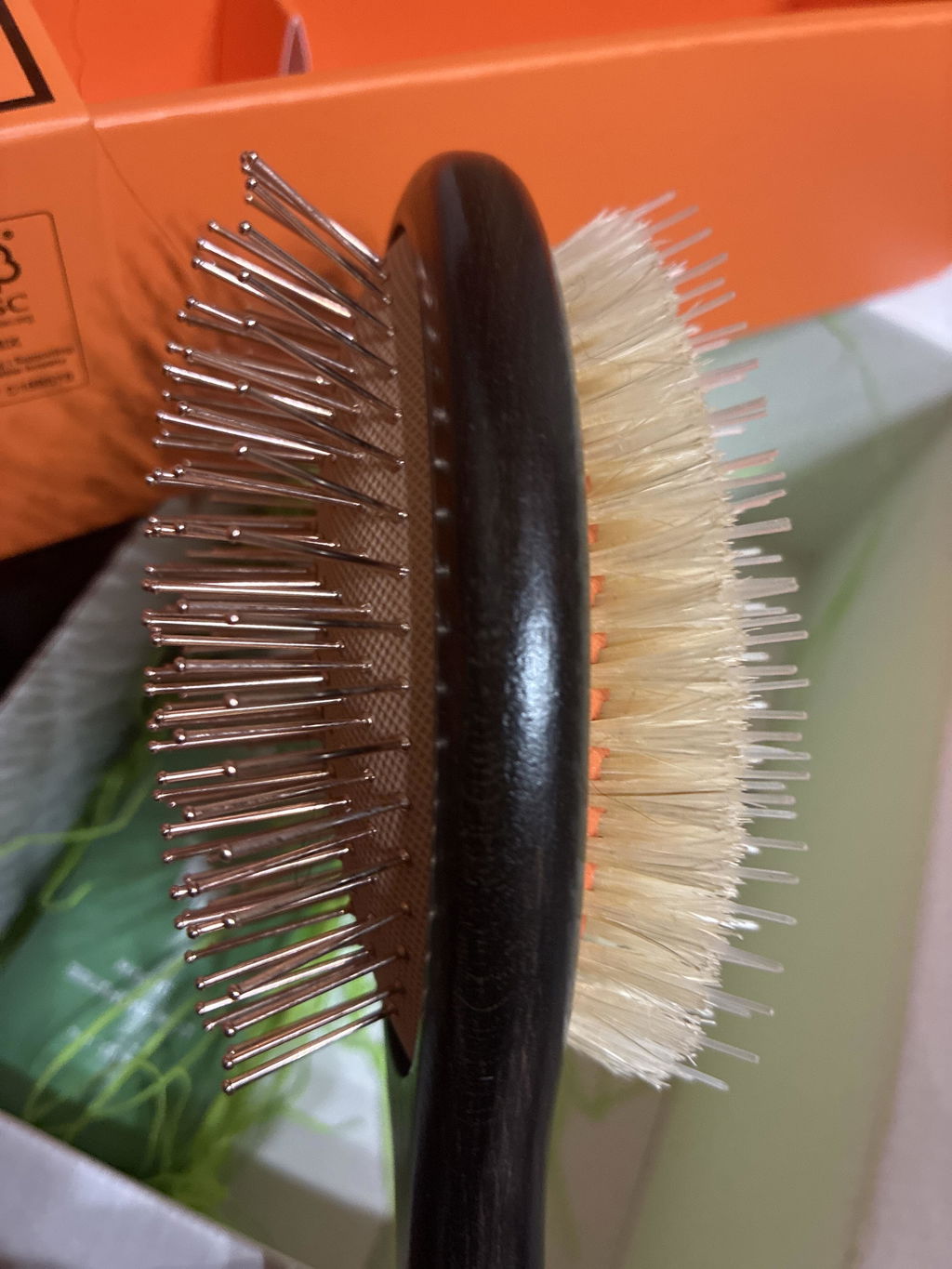
The pin side of SHARR is designed to gently arrange and smooth the coat, while the natural boar-bristle side is intended for finishing the surface.
If a large amount of loose undercoat remains or if there are tangles, use an appropriate grooming tool for the specific task before moving on to SHARR.
| Tool | Purpose / Difference from SHARR | When to Use & Precautions |
|---|---|---|
| Slicker brush | Helps work through light tangles and remove loose fur from dense areas | Use only where needed after checking with your hands. Work in small movements from the ends of the hair and avoid scraping the skin. Never force through a tight mat. |
| Undercoat rake | Removes naturally shed undercoat trapped inside the coat | Use after tangles have been addressed and only where undercoat has built up. Choose a tooth length appropriate for the coat, and avoid pressing too hard or repeatedly brushing the same area. |
| Metal comb | Checks whether tangles or loose hair remain near the roots | Use as a final check during preparation. Work with a small section of hair and gradually move from the ends toward the roots. If the comb catches, stop and inspect the area. |
When choosing an undercoat rake, distinguish between tools that use metal teeth to comb out loose undercoat and tools that are designed to cut the coat. Here, we are referring to the type that removes naturally shed undercoat without cutting the hair.
If you are unsure which tool suits your dog’s coat, asking a professional groomer to assess the actual coat condition is the safest option.
You do not need to use every grooming tool during every session. If there are no tangles and little loose undercoat, you can skip these preparation steps.
For mats that sit tightly against the skin or large tangled areas, avoid pulling on them or cutting them out yourself with scissors. Consult a professional groomer instead.
STEP 2 | Gently Brush Each Area with the 14K Gold-Plated Pin Side
Once the coat has been prepared, use the 14K gold-plated pin side of SHARR and gently brush in the direction of hair growth.
For the back and sides of the body, work through small sections of hair at a time.
For longer feathering around the chest, legs, and tail, support the hair near the roots with one hand and begin at the ends. If the brush moves through smoothly, gradually work closer toward the roots.
Short-coated Border Collies do not need to follow exactly the same process as dogs with long feathering. Use light strokes appropriate for the length of the coat. If you feel resistance, do not apply more force—stop and check the area with your hands instead.
STEP 3 | Finish the Surface with the Natural Boar-Bristle Side
To finish, use the natural boar-bristle side and gently brush in the direction of hair growth, almost as if you were stroking the coat.
Use light pressure over areas such as the back, sides of the body, and chest.
The boar-bristle side is designed for finishing the surface of the coat. It does not replace the process of checking for tangles or removing accumulated undercoat, so always address those areas beforehand.
Recommended Grooming Flow
Check with your hands → Address tangles or loose undercoat if necessary → Check with a metal comb → Use the 14K gold-plated pin side of SHARR → Finish with the natural boar-bristle side
7. Areas to Check Carefully on a Border Collie
Behind the Ears
Hair can overlap in this area, making tangles easy to miss.
Do not pull on the ear. Instead, gently separate small sections of hair with your fingers and check close to the roots.
Under the Front Legs and Around the Chest
The hair under the front legs experiences frequent friction as the dog moves, while the longer coat around the chest can easily overlap and tangle.
Also check any areas where a harness makes contact with the coat.When grooming the longer feathering on the chest, work gradually from the ends.
Inner Thighs and Upper Hind Legs
Hair can overlap easily in this area, and dirt from walks may also collect here.
Avoid lifting the leg into an uncomfortable position. Keep your dog in a relaxed posture and check one small area at a time.
Base of the Tail and Tail Feathering
Pay attention to the dense coat around the base of the tail and to tangles near the ends of longer feathering.
Never pull on the tail. Support the hair closer to the roots with one hand while gently working through the coat.

8. How Often Should You Brush a Border Collie?
As a general guideline, brushing the entire body once or twice a week is a good starting point. Adjust the frequency according to your dog’s coat density and how easily it tangles.
During periods of heavier shedding, short daily grooming sessions may work better.
In addition, areas such as behind the ears and under the front legs can be checked during everyday bonding time.
Rather than focusing simply on how often you brush, the priority should be catching tangles while they are still small and keeping grooming comfortable for your dog.
9. Making Everyday Life with Your Border Collie More Comfortable
Border Collies have a long history of working together with people. Knowing this background helps us understand just how important shared activities—playing, learning, and thinking together—can be for this breed.
The same idea applies to coat care. Start by looking at each part of the coat individually: the outer coat and undercoat, the larger areas of the body, and the longer feathering.
Simply running your hands through your dog’s coat and checking how it feels today can help you better understand what kind of care your own dog needs.
By choosing grooming tools according to the condition of the coat and gently finishing with SHARR, we hope brushing can become more than just routine maintenance—a quiet opportunity to communicate and spend meaningful time together.
For happier, more comfortable days for dogs and cats around the world.

Magic Pet Brush SHARR
$85
BUY NOW