Maltipoo Guide with NENE's store 🤍
What Is a Maltipoo? A Complete Guide to Their Personality, Coat Types, and Daily Brushing Routine 🐶🩷
Maltipoos are loved for their fluffy coats and adorable, teddy bear-like appearance. 🧸🤍
Combining the charm of the Maltese and the Toy Poodle, these little companions have become beloved members of families around the world.
But did you know that a Maltipoo’s grooming needs can vary depending on their coat type and thickness? ✨
In this guide, we’ll explore the history and origins of Maltipoos, their personality traits, and their unique coats. We’ll also share helpful tips for everyday brushing.
Let’s learn more about your furry friend and make daily grooming an even more enjoyable experience!
1. What Is a Maltipoo? Exploring Their History and Origins
A Maltipoo is a mixed-breed dog whose parents are a Maltese and a Toy Poodle.
The name “Maltipoo” combines the names of its two parent breeds: Maltese and Poodle.
So, what is the history behind each of these beloved breeds?
🤍 The Origins of the Maltese
The Maltese is a small dog breed that has been cherished by people for centuries.
With deep historical ties to the Mediterranean region, Maltese dogs have long been treasured as companion animals, living closely alongside humans.
One of their most distinctive features is their long, silky, smooth coat. Their beautiful white fur is another hallmark of the breed.
Known for their affectionate nature, Maltese dogs have been beloved companions in homes for generations.
🐩 The Origins of the Toy Poodle
The Toy Poodle is the smallest size variety of the Poodle.
Looking back at the history of Poodles, they were originally bred as working dogs, helping retrieve game from the water.
Their traditional grooming styles also have historical roots, with certain cuts designed to help protect vital areas of the body while allowing them to move freely in the water.
Over time, smaller Poodles became increasingly popular as companion dogs, bringing their intelligence and charming personalities into family homes.
Poodles are particularly known for their intelligence, ability to learn, and distinctive curly coats.
🩷 A Maltipoo: The Best of Both Worlds
The Maltese is known for its silky coat, while the Toy Poodle is famous for its curly fur.
As a mix of these two breeds, Maltipoos can inherit a variety of coat textures, colors, and facial features, giving each dog their own unique look.
However, they don’t necessarily inherit exactly half of each parent’s characteristics.
Some Maltipoos have straighter coats resembling the Maltese, while others have tight curls similar to the Toy Poodle.
That’s part of what makes every Maltipoo so special — no two are exactly alike! 🐶💕

2. What Is a Maltipoo’s Personality Like?
A Maltipoo’s personality can be influenced by traits inherited from both parent breeds: the Maltese and the Toy Poodle.
🩷 They Love Spending Time with Their Humans
Maltese dogs have a long history of living closely alongside people, while Toy Poodles are known for enjoying interaction with their humans.
As a result, many Maltipoos enjoy staying close to their owners, spending time together, and playing with their families.
Daily walks and playtime are wonderful opportunities to bond with your furry friend. Even grooming sessions, such as brushing, can become a special time to connect with them.
🧠 Intelligent and Quick to Learn
Thanks to the intelligence of the Toy Poodle, some Maltipoos are quick to learn through play and training.
You can help your pup build positive associations with grooming by creating enjoyable experiences, such as asking them to sit when you bring out the brush or offering a treat after brushing.
🐾 Playful and Full of Energy
Although Maltipoos are small and adorable, many have a playful and energetic side.
Daily walks and indoor play can help keep them happy and healthy. Just remember to adjust the amount of exercise to your dog’s size, age, and physical condition.
Of course, personality isn’t determined by genetics alone. A dog’s upbringing and life experiences also play an important role.
Every Maltipoo has their own unique personality, so take the time to understand what makes your furry friend special. 💕

3. Maltipoo Physical Traits and Everyday Life
Maltipoos are generally considered small dogs, and their compact size makes them well suited to life indoors.
However, their adult size can vary depending on the size of their parents and individual differences.
🏠 Are Maltipoos Suited to Indoor Living?
Their small size makes Maltipoos a great fit for many households, including those where they spend most of their time indoors.
However, being small doesn’t mean they don’t need exercise or playtime! Daily walks and indoor activities help support both their physical and mental well-being.
It’s also important to watch out for jumping down from sofas or beds and slippery floors. Creating a safe home environment can help reduce strain on their legs and joints.
👀 Don’t Forget About Facial Grooming
Maltipoos can grow hair around their eyes and ears, so these areas need regular attention.
Check for tear stains or dirt around the eyes, as well as tangles behind the ears.
The hair behind the ears is particularly prone to tangling because of friction and movement.
Gradually helping your Maltipoo get comfortable with having their face touched can also make everyday grooming easier and more enjoyable for both of you. 💕

4. Maltipoo Coat Types and Fur Characteristics
One of the most important things to understand when caring for a Maltipoo is their coat.
Maltipoos don’t all have the same type of fur. Depending on which parent they take after, their coat length, texture, thickness, and shedding patterns can vary.
🧸 From Straight to Curly: Different Coat Types
Maltipoo coats generally fall into three broad categories.
① Straight Coat
Similar to the Maltese, this coat is relatively straight and silky.
When left long, the fur can rub together and become tangled, particularly behind the ears and around the armpits.
② Wavy Coat
This coat features soft waves that give Maltipoos their signature fluffy appearance.
Depending on the coat length and thickness, the fur can become tangled more easily. Be sure to check the inner layers of the coat, not just the surface.
③ Curly Coat
Similar to the Toy Poodle, this coat features tight, bouncy curls.
Loose hairs tend to be less noticeable around the home because they can become trapped within the coat. However, these hairs can also accumulate within the fur and contribute to tangles.
That’s why simply brushing the surface may not be enough. Tangles can remain hidden close to the roots, even when the outer coat looks neat and fluffy.

✨ What Is the Difference Between a Single Coat and a Double Coat?
Maltese dogs and Poodles are generally known as single-coated breeds.
For this reason, Maltipoos may also have coats with less noticeable undercoat. However, mixed-breed dogs can vary from one individual to another, so you cannot determine a dog’s coat structure based on its breed name alone.
Also, having less shedding does not necessarily mean that a dog’s coat is easier to maintain.
Even if a dog sheds very little, long hair or tightly curled fur can still develop tangles and mats.
🪮 How Often Should You Brush a Maltipoo?
Although the frequency depends on coat type and hairstyle, daily brushing is a good habit to establish for Maltipoos.
In particular, if your Maltipoo has tightly curled fur or a longer coat, try to check its coat every day.
Rather than brushing for a long time in one session, it is important to check the coat regularly, even if only for a few minutes at a time.
Tangles can also develop in dogs with short, trimmed coats.
Do not assume that a short coat requires no maintenance. Instead, adjust your grooming routine to suit your dog’s individual coat type and skin condition.
5. Common Grooming Challenges for Maltipoos
Maltipoos have soft, fluffy, adorable coats, but there are a few important things to keep in mind when caring for them every day.
Challenge 1: Mats Behind the Ears and Under the Legs
Areas that require particular attention in Maltipoos include behind the ears, under the front legs, the inner thighs, and areas where collars or harnesses rub against the coat.
These areas are prone to tangling because the hair rubs together as your dog moves, and the skin in these areas shifts during movement.
Tip: Before brushing, gently feel the coat with your hands to check for any snags or tangles. Part the hair into small sections and check the condition of the coat all the way down to the roots.
Challenge 2: The Outer Coat Looks Fine, but the Roots Are Tangled
In Maltipoos with tightly curled coats, the outer layer may look soft and fluffy even when small tangles remain underneath.
If left untreated, these tangles can become intertwined and develop into larger mats.
Tip: Part the coat into small sections and check from the roots to the ends. A slicker brush or metal grooming comb can also help you check whether the hair can be brushed through gently without resistance.
Challenge 3: Your Maltipoo Dislikes Brushing
Pulling on mats or repeatedly brushing the same area can cause pain and discomfort, potentially making your dog develop a negative association with brushing.
Some dogs are also sensitive about being touched in certain areas, such as their paws and face.
Tip: Start with areas that are generally easier for your dog to tolerate, such as the back. Brush a few strokes at a time and take breaks, adjusting the session to your dog’s comfort level.
If the hair is already tightly matted, do not try to pull the mats apart by force. This can injure the skin. If you cannot remove the mats safely, consult a professional groomer.
Challenge 4: Static Electricity Makes the Coat Frizzy and Dry
Static electricity can occur more easily during dry seasons or in environments with low humidity.
When static builds up, the coat may become frizzy, making it harder to brush through and potentially increasing the risk of tangling.
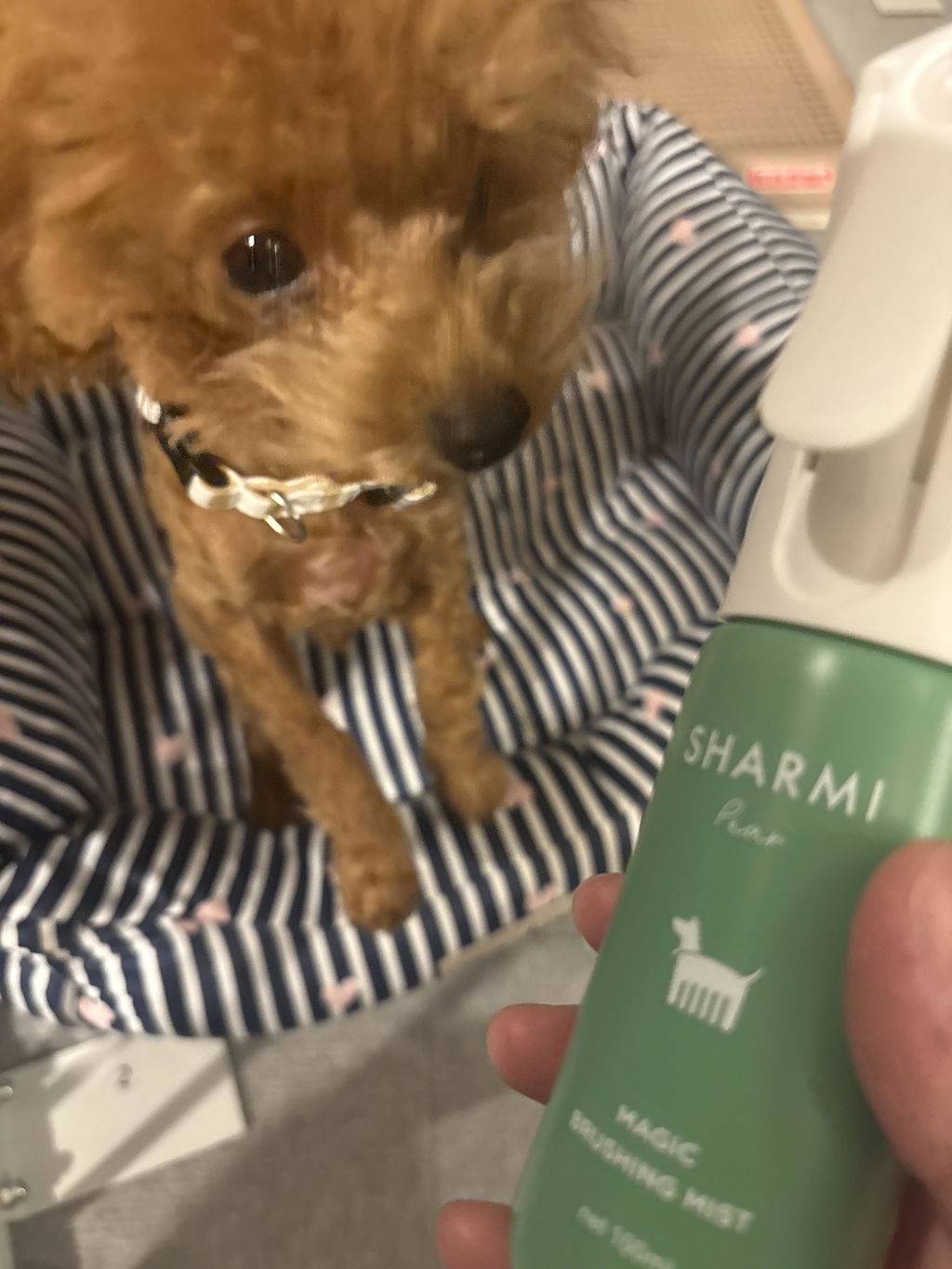
Tip: Keep an eye on indoor humidity and consider using a dog-specific brushing mist when needed. Always follow the product instructions and take care to prevent the mist from entering your dog’s eyes or nose.

6. How to Use SHARR for Different Maltipoo Coat Types and Which Brushes to Use Alongside It
In this section, we’ll introduce some key tips for grooming your Maltipoo’s coat.
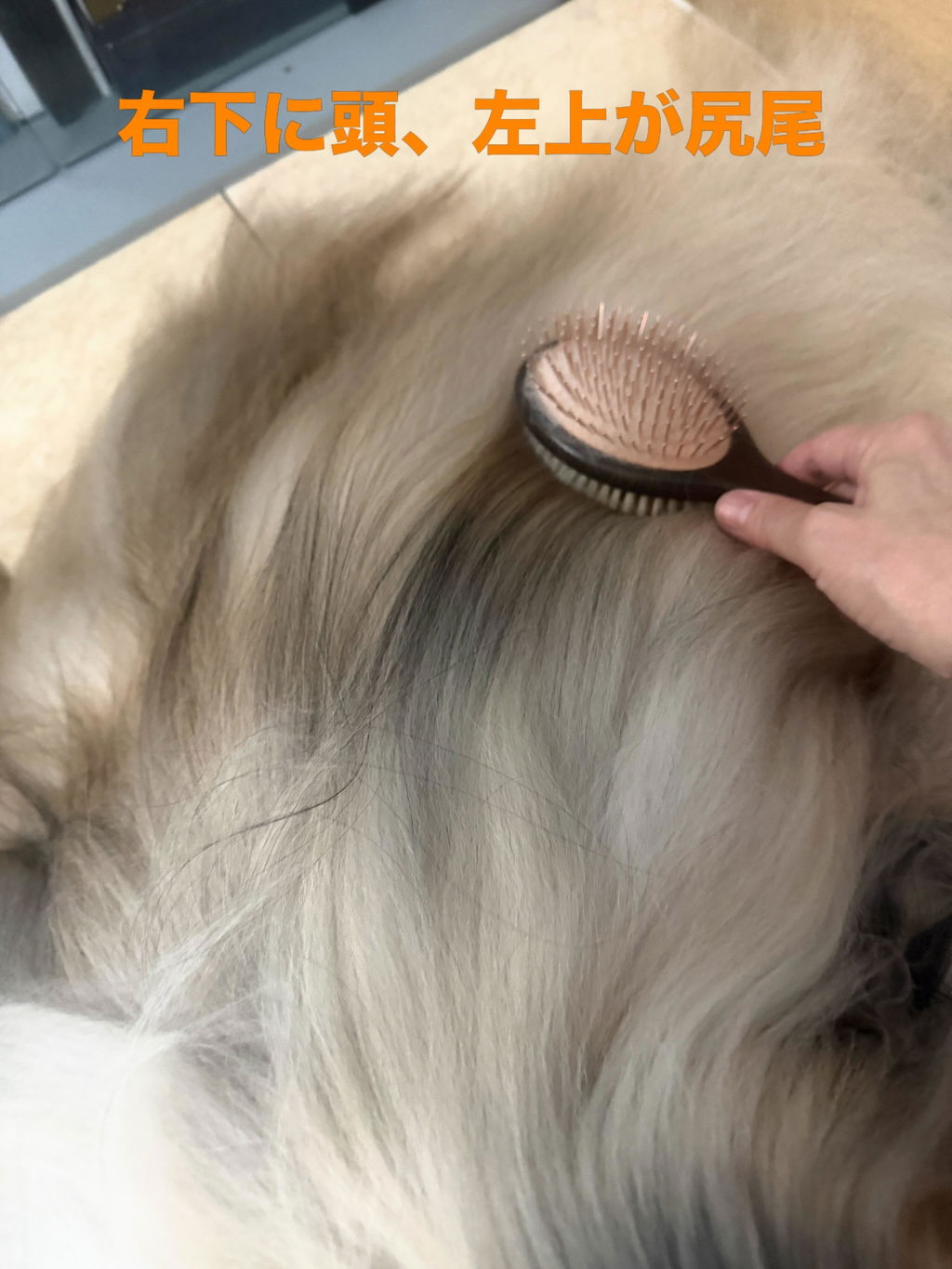
SHARR by NENE's store is a 2-in-1 pet brush that allows you to switch between its 14K gold-plated pin side and natural boar bristle side.
The key is not to brush every dog in the same way, but to adjust your grooming technique according to your dog’s coat type and the condition of its fur.
STEP 1 | Check the Coat Condition by Hand First
Before you start brushing, gently run your hands over your dog’s body to check the condition of its coat.
For Maltipoos, pay particular attention to the following areas:
・Behind the ears: Check for tangles caused by friction.
・Under the front legs and inner thighs: Look for small mats or tangles near the roots.
・Around the neck: Check for tangles in areas where a collar or harness rubs against the coat.
・Paws and leg joints: Check for tangled fur and any dirt caught in the coat.
・Tail: Check for loose hair and tangles hidden beneath the outer layer.
If you notice any snags or tangles, do not force the brush through the coat. First, gently check the condition of the tangled area.
STEP 2 | Use a Slicker Brush or Metal Comb When Needed
Depending on your Maltipoo’s coat type, grooming may be easier when you use a slicker brush or metal comb alongside SHARR.
・Slicker Brush
A slicker brush is designed to gently work through the coat using fine pins, one small section at a time. It can be helpful when brushing wavy or curly coats.
When using a slicker brush, work in small sections and avoid pressing the pins firmly against your dog’s skin.
・Metal Comb
A metal comb is used after brushing to check whether it can pass smoothly through the coat, including the areas close to the roots.
It is particularly useful for checking areas prone to matting, such as behind the ears and under the front legs.
However, neither tool should be used to forcibly pull apart or remove tightly matted fur.
If a mat is large or close to the skin, consult a professional groomer.

STEP 3 | Brush with SHARR’s 14K Gold-Plated Pin Side
Once you have checked for tangles and addressed any areas that need extra care, use the 14K gold-plated pin side of SHARR to brush your dog’s coat.
Gently move the brush in the direction of hair growth.
For Maltipoos with tightly curled coats, it is important not to focus only on the surface. Part the fur into small sections and check the condition of the inner coat as you brush.
For Maltipoos with straighter coats, pay attention to any tangles around the ends of the hair.
Regardless of coat type, avoid brushing the same area repeatedly with excessive pressure.
STEP 4 | Finish with the Natural Boar Bristle Side
Finally, gently brush along the direction of hair growth using SHARR’s natural boar bristle side, smoothing the coat with soft, gentle strokes.
This helps smooth the outer coat and achieve a soft, fluffy finish.

🩷 Grooming Tips for Each Coat Type
Straight-Coated Maltipoos
Check for tangles at the ends of the hair, behind the ears, and around the neck. If your dog has a longer coat, start gently detangling from the ends and work your way up to help reduce pulling.
Wavy-Coated Maltipoos
Check for tangles not only on the surface but also within the inner coat. If needed, gently work through the fur with a slicker brush, then use a metal comb to check whether it can pass smoothly through the coat down to the roots.
Curly-Coated Maltipoos
Pay particular attention to small tangles that may be hidden near the roots. Part the coat into small sections and use a slicker brush and metal comb as needed. Once you have checked for tangles, brush with SHARR and finish with the natural boar bristle side.
Even within the same breed, Maltipoos can vary in coat texture and thickness.
Take time to observe your dog’s coat and choose the tools and grooming techniques that best suit their individual needs. ✨
7. Make Brushing a More Enjoyable Experience
Brushing is about more than just keeping your dog’s coat looking beautiful.
By gently touching your dog every day, you may also notice changes more easily, such as unusual tangles, skin redness, or dirt caught in the coat.
Grooming can also become a special bonding experience when you speak gently to your dog and make them feel comfortable throughout the process.
Even if your dog dislikes brushing at first, start with short sessions and gradually help them get used to it at their own pace.
What matters most is not achieving a perfect finish, but making sure your dog feels comfortable and relaxed.

8. Conclusion | Grooming That Celebrates Your Maltipoo’s Unique Coat
Maltipoos inherit the wonderful qualities of both Maltese dogs and Toy Poodles.
Their coats can vary from straight to wavy to curly, and every dog has its own unique characteristics.
That is why it is important not to rely on breed characteristics alone, but to check your own dog’s coat texture and skin condition.
Start by checking the coat by hand, then use a slicker brush or metal comb when needed, followed by gentle brushing with SHARR. Finally, use the natural boar bristle side to smooth and finish the outer coat.
One of the joys of daily grooming is being able to notice the little changes in your beloved companion and see their happy, relaxed expressions as they enjoy the experience.
We hope that brushing with SHARR will not only help keep your beloved companion’s coat beautiful, but also become a heartwarming moment shared with your cherished family member.
Bringing comfort to dogs and cats around the world.
At NENE's store, we will continue to strive to make everyday life more comfortable and joyful for beloved pets and the families who love them. 🐶🐱🩷

![[Scheduled to ship by the end of March 2027] Magical Pet Brush SHARR mini](http://nenesstore.com/cdn/shop/files/ChatGPTImage2026_9_23_17_28_58.png?v=1790164179&width=533)
![[Scheduled for shipment by the end of March 2027] Magical Pet Brush SHARR + SHARR mini Set](http://nenesstore.com/cdn/shop/files/ChatGPT_Image_2026_9_24_15_36_55_2.png?v=1790231871&width=533)