Learn about Pomepoos with NENE's store 🤍
NENE's store x Dog Encyclopedia
Understand the charm of their fluffiness,
and find the right brushing for them.
Hello everyone! 🐶
I’m ROSA, a staff member at NENE's store, home of the magical pet brush, SHARR. 🐶
Fluffy fur and round, sparkling eyes—the "Pomepoo" is captivating with its teddy bear-like charm! ✨
The Pomapoo is a mixed breed between a Pomeranian and a Poodle. Whether they have soft, airy fur or tight, curly locks, their coat characteristics vary greatly.
That is why what matters most is not "this care because it's a Pomapoo," but rather finding "the care that suits my dog's coat." This time, we’ll guide you through their history and personality, as well as how to brush them based on their coat type.

01 | History and Roots of the Pomepoo
The Pomapoo is a cross between a Pomeranian and a Poodle. Even their name, "Pomepoo," comes from both of these breeds.
Pomeranian | A Small Spitz with Fluffy Fur
The Pomeranian is a breed descended from northern Spitz-type dogs. Their name comes from the Pomerania region, which spans modern-day Germany and Poland. Their abundant fur and lively personality are traits that reflect these roots.
Poodle | A Smart Dog Who Excelled by the Water
Originally, Poodles were dogs tasked with retrieving waterfowl. They are characterized by their curled coats and their ability to work in cooperation with humans. Today, from Toy Poodles on down, Poodles of various sizes are beloved.
In a Pomepoo, these characteristics from both parent breeds appear in various ways.
However, which parent they resemble more varies from dog to dog.

02 | What is a Pomepoo's personality like?
They may inherit the Pomeranian's curious nature or the Poodle's intelligence and social affinity for people. Some are playful and affectionate, while others are a bit cautious and sensitive to changes in their environment.
Of course, individual personalities vary greatly and are also influenced by the environment in which they were raised and their experiences. When brushing, it is important to proceed gently while watching your dog’s expressions and reactions.
03 | Physical Traits and Lifestyle
While many Pomapoos are small, their physique depends on the size of the parent dogs and genetics. Even for small dogs, it is important to spend time using their bodies and minds through walks and play.
When grooming, choose a stable, non-slip surface. It is recommended to help them get used to it little by little, rather than forcing them to stay still or continuing for long periods.
04 | Coat and Fur Characteristics of the Pomepoo
Pomeranians have a double coat with an outer layer and an undercoat. Poodles, on the other hand, are characterized by curled fur; while they shed relatively little, their hair tends to tangle easily.
A Pomepoo’s coat may resemble one of these or be a blend of both characteristics.

Even among Pomepoos, there are individual differences in hair density, shedding, and susceptibility to tangles. Don't just look—touch the coat and check all the way to the roots.
05 | Common Brushing Challenges for Pomepoos
Mats form behind the ears or in the armpits
Areas behind the ears, armpits, where legs meet the body, and where collars or harnesses rub are prone to matting due to friction. Be especially diligent in checking these areas if your dog has fine or curly hair.
The surface looks clean, but the roots are tangled
Even if they look fluffy, tangles can be hidden inside the coat. Part the hair little by little and check it without pulling the skin.
Shed hair gets trapped in the undercoat
For dogs with rich undercoats, shed hair can become trapped inside. Since the amount of shedding changes by season and individual, watch their daily condition and adjust the frequency of grooming accordingly.
06 | How to Use SHARR and Supplementary Brushes
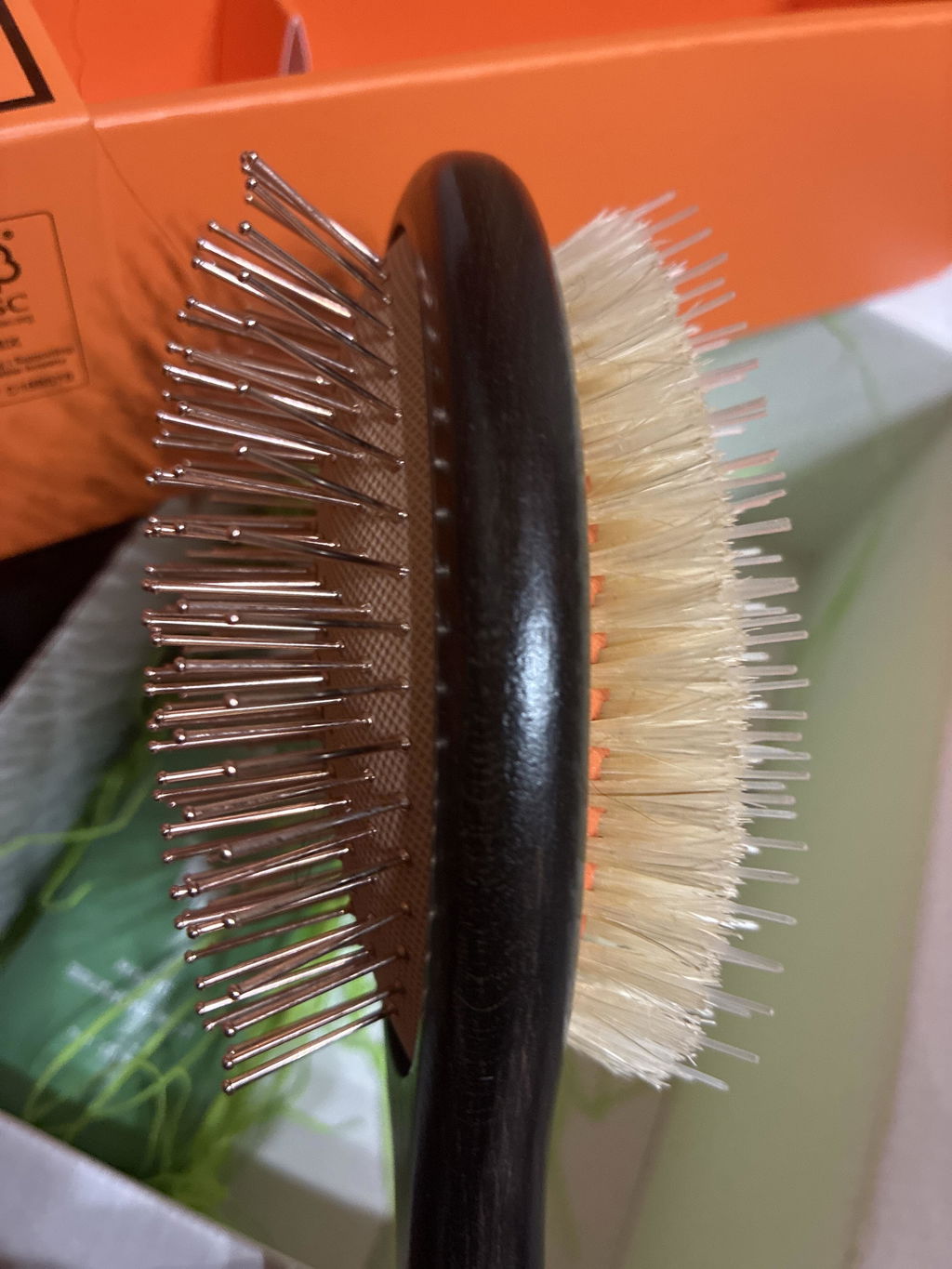
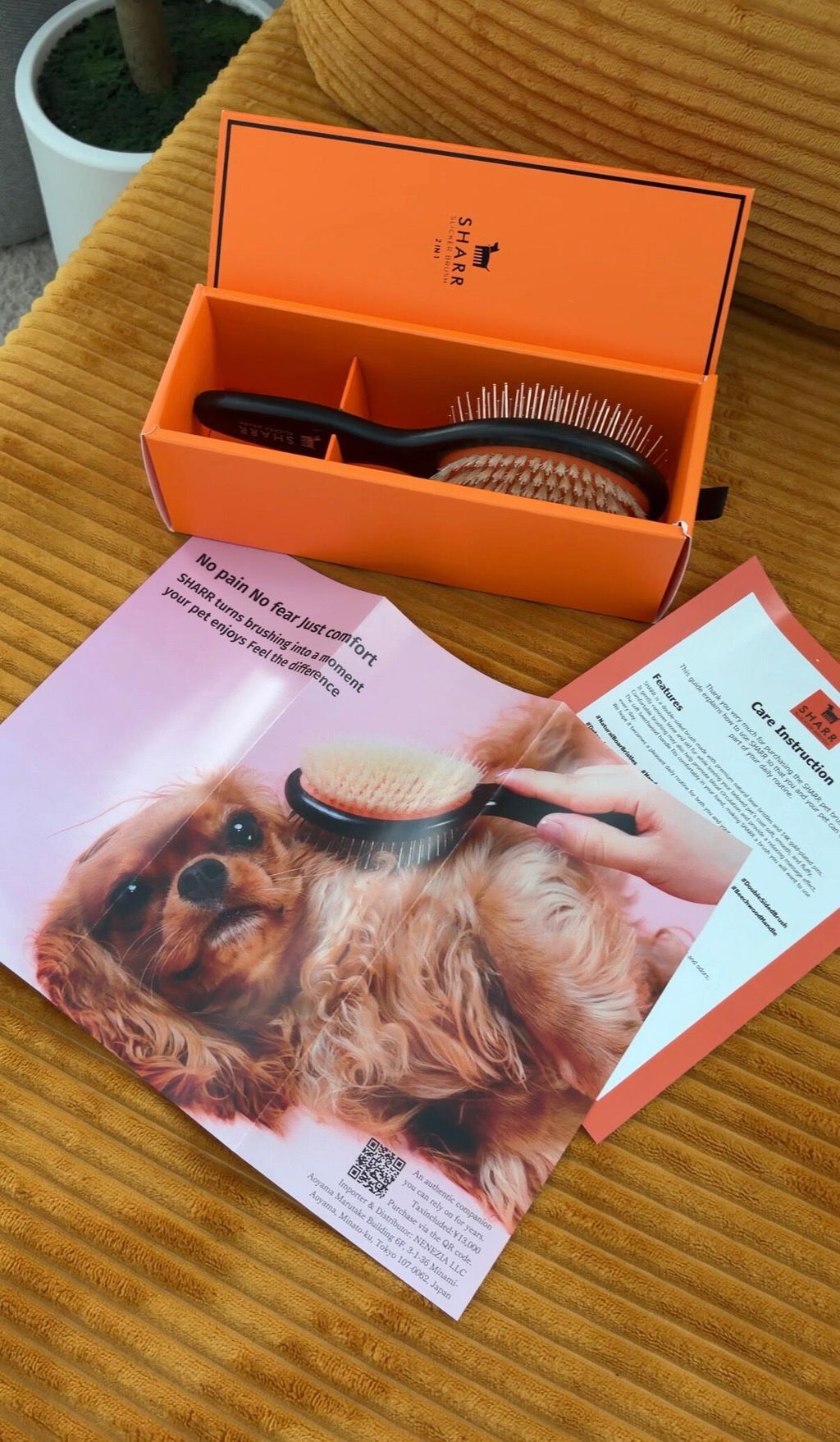
The key to daily brushing is using tools suited to the coat type in the proper order. NENE’s store’s 2-in-1 pet brush, "SHARR," features both 14K gold-plated pins and natural boar bristles that can be used for different purposes.
However, you don't have to complete all detangling and undercoat care with SHARR alone.
Use slickers or metal combs alongside it as needed.
STEP 1
Check their body and coat by hand
Touch behind the ears, armpits, chest, and where legs meet the body to check for mats, tangles, dirt, or skin abnormalities. Part the hair to check any area you are concerned about.
Add as needed
Groom with a slicker or metal comb
For curly-haired dogs, use an appropriate slicker to gently detangle from the ends, then check with a metal comb to see if it reaches the roots. For dogs with thick undercoats, use an undercoat brush suited to their hair type only when necessary. In all cases, be careful not to apply too much pressure or over-brush.
STEP 2
Brush with the 14K gold-plated pin side of SHARR
Once you've confirmed there are no tangles, brush gently along the grain of the hair. If it snags, stop and don't force it through.
STEP 3
Finish gently with the natural boar bristle side
Brush as if stroking along the grain of the hair to smooth the surface. Focus on keeping the session pleasant, even if it's short, by watching their expressions and reactions.

Dogs with tight curls:
Check by hand → Slicker → Metal comb → SHARR pin side → Boar bristle side
Dogs with abundant undercoats:
Check by hand → Undercoat brush as needed → SHARR pin side → Boar bristle side
Dogs with few tangles:
Check by hand → SHARR pin side → Boar bristle side
You don't need to use all the tools every time. Choose your tools and frequency based on the condition of their coat and the sensitivity of their skin, and if your dog dislikes brushing, don't force it—take a break.
07 | Tips for keeping up with daily care
Start with short sessions at first, and praise them gently if they stay calm. It is also recommended to choose times when your dog feels secure, such as after a walk or while they are relaxing.
It’s perfectly fine to have days where you only do "just behind the ears" or "just the back."
Continuing without pressure is the first step toward making daily care a habit.
08 | Closing | Comfortable moments in daily life with your Pomepoo
The Pomepoo combines the charms of the Pomeranian and the Poodle. Whether they are fluffy or curly, each has a different kind of loveliness.
That is why daily care should be tailored to them. Observe the condition of their coat, choose the necessary tools, and brush them gently.
Brushing is not just a time to tidy up their fur.
It's a time to talk to them, touch them gently, and notice small changes.
May your time using SHARR become a way to communicate with your precious companion.
NENE’S Store
For dogs and cats everywhere,
a comfortable daily life.
🐾