Learn about Welsh Corgis with NENE's store 🐶🤍
Learn About Welsh Corgis with NENE's store🐶🤍
Hello there🤍
I'm ROSA, a staff member at NENE's store, home of the magical pet brush, SHARR🌻
Short legs and a plump little bottom.
The adorable Welsh Corgi is truly charming.
Did you know that they were actually once active as herding dogs, chasing cattle?
In this article, we’ll dive into the history, personality, and features of the Corgi’s lush coat, as well as how to perform their daily brushing.
Table of Contents
02|Bright and active: What is a Corgi's personality like?
03|Small in stature, but with a sturdy build
04|The secret behind the Corgi's plump coat
05|Things to be careful about when brushing a Corgi
06|Enjoying brushing time with your Corgi and SHARR
07|4 areas you should especially check
08|How often should you brush them?
09|Make brushing a relaxing part of your daily life with your Corgi.
■ 01|Where do Corgis come from?
 The home of the Welsh Corgi is the Wales region of the UK.
There are two breeds of Corgis: the Pembroke and the Cardigan, each with its own history.
The Pembroke we are introducing today once had the job of moving livestock like cattle on farms.
They were herding dogs that would run behind the cattle and lightly nip their heels to encourage them to move.
It’s a bit surprising to imagine them chasing cows with those short legs, isn't it?
Their low height is thought to have helped them move quickly beneath the feet of livestock.
While they are now cherished as family pets, you can still see traces of their herding roots in the way they run with boundless energy and react sensitively to movement around them.
■ 02|Bright and active: What is a Corgi's personality like?
 Corgis are generally known as intelligent, active, and curious dogs.
Many of them love playing with their families and enjoying walks, making them a breed that really values physical activity.
They are also very observant of changes in their surroundings and may bark out of caution.
Because they were originally bred to herd livestock, you might see them chasing moving objects or clustering around people's feet.
Of course, personalities vary from dog to dog.
Some may be big cuddlers, while others might be a bit more cautious.
The most important thing is to understand the breed's characteristics, then embrace the unique personality of "your dog."
Finding the play style and way of communicating that suits your dog is key.
■ 03|Small in stature, but with a sturdy build
A major feature of the Corgi is their long body and short legs.
While that silhouette near the ground is adorable, they are actually muscular and possess a very solid skeletal structure.
Given their history as working herders, they are even more active than their appearance might suggest.
Adding play or mentally stimulating activities to your daily walks will help them lead a fulfilling life.
At the same time, there are things to keep in mind for their daily life.
For example, slippery floors or jumping down from high places.
It’s important to adjust your home environment to reduce the strain on their joints and back.
Also, maintaining a healthy weight is crucial to supporting their overall well-being.
■ 04|The secret behind the Corgi's plump coat

The plump coat on a Corgi’s neck, chest, and bottom.
Their rich coat, which you just can't help but want to touch, is one of their biggest charms.
The secret lies in what is called a "double coat" (a two-layered coat structure).
Outer coat (guard hairs)
Relatively firm hairs covering the outside.
Undercoat
Soft, dense hair growing underneath.
The combination of these two layers creates the characteristic fullness of a Corgi’s coat.
On the other hand, Corgis are also known for being heavy shedders.
They shed throughout the year, but during seasonal transitions, the undercoat may shed in clumps.
This is what is known as "molting season."
Finding fluffy fur on the floor or having hair come off just by petting them.
For families living with Corgis, managing shedding is a common part of daily life.
That is exactly why regular brushing is so important.
■ 05|Things to be careful about when brushing a Corgi
To groom a Corgi’s lush coat, it is vital to brush gently so you don't stress their skin or coat.
Keep these three points in mind:
- Brush along the direction of hair growth without applying too much pressure.
- Do not force brushes through tangled hair.
- Keep grooming sessions short, and avoid rubbing the same spot repeatedly.
During brushing, check for any redness or scrapes on the skin.
Please cherish this pleasant grooming time by always paying attention to your dog's reaction.
■ 06|Enjoying brushing time with your Corgi and SHARR

Now, let's introduce how to incorporate SHARR into your grooming routine for your Corgi.
The important thing is not to try and do the whole body all at once from the start.
Watch your dog's reaction and try starting with short sessions.
STEP 1
Check the condition of the coat with your hands
First, gently touch their neck, chest, and bottom.
Check if the hair is tangled or if loose undercoat has accumulated.
If there are tangles, don't force a brush through them; gently detangle them by hand according to the condition.
STEP 2
Use a brushing spray if necessary
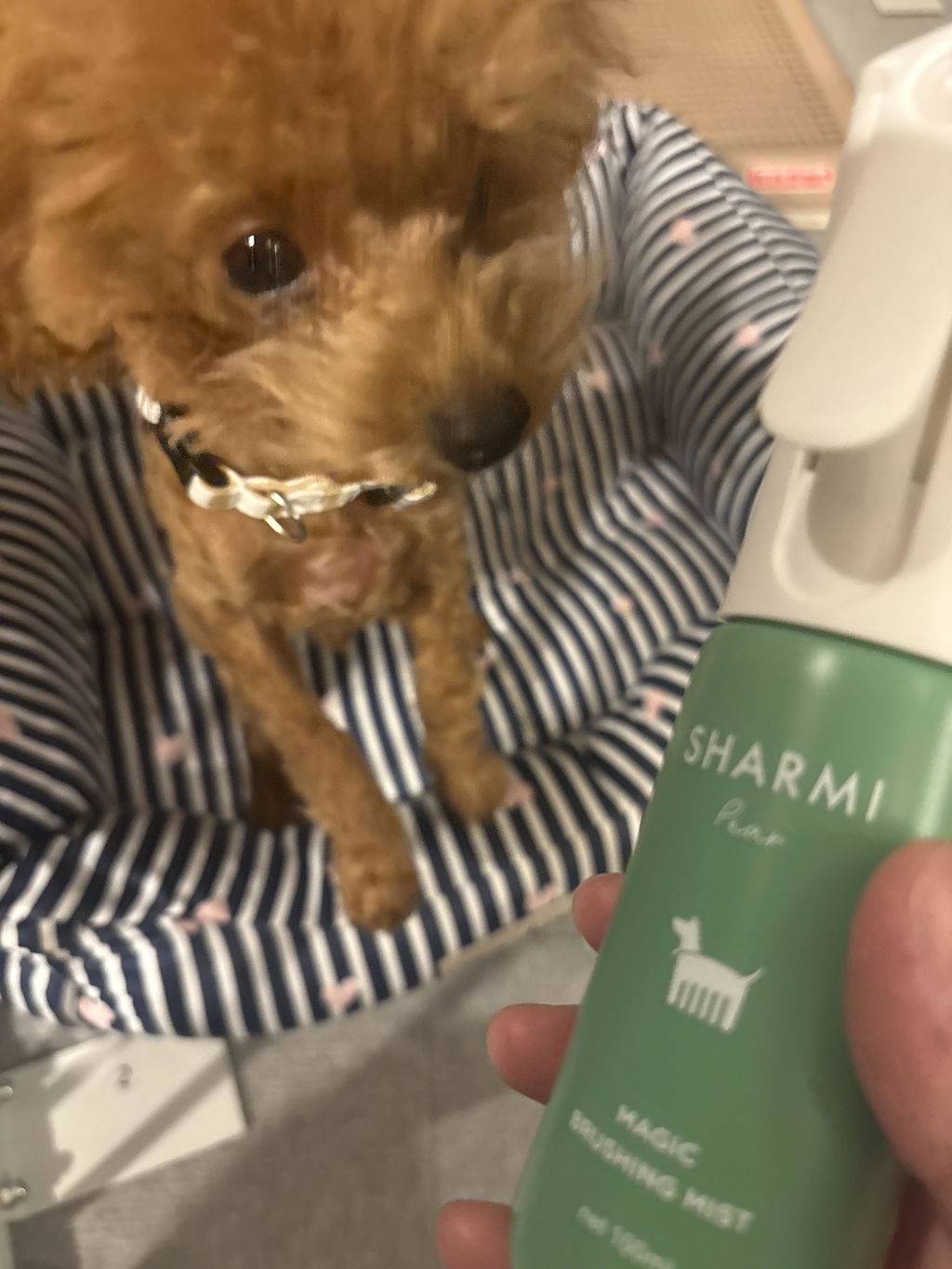
If you want to incorporate a brushing spray, SHARMI is one option.
When using it, follow the product instructions, use an appropriate amount, and be careful not to spray directly into their eyes or nose.
STEP 3
Smooth the coat with the SHARR pin side
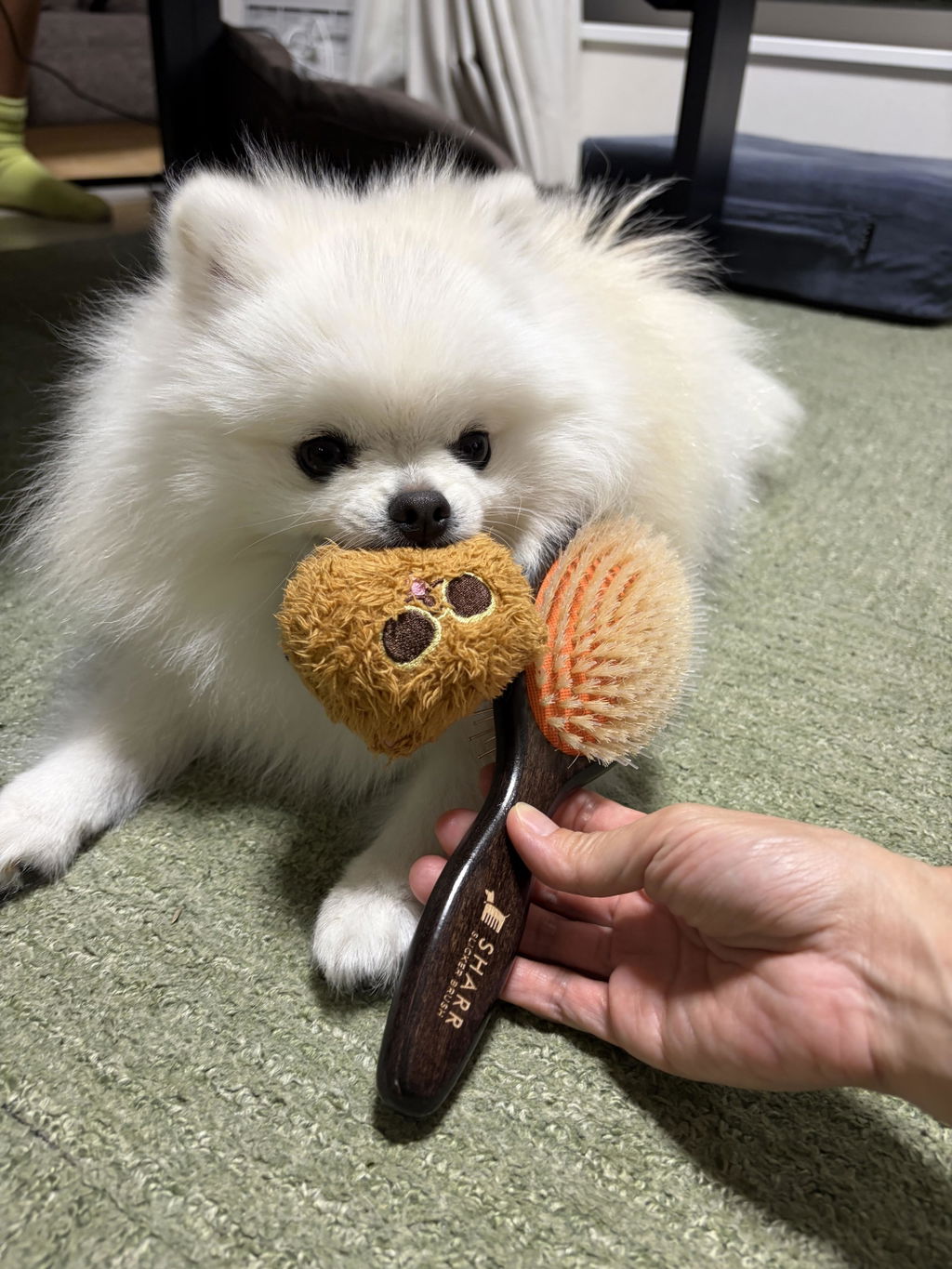
Use the 14K gold-plated pin side of the SHARR to brush gently along the flow of the hair.
Don't apply too much pressure, and use short, gentle strokes.
The key is not to press it firmly against the skin.
STEP 4
Finish with the boar bristle side
Finally, gently smooth the surface coat with the boar bristle side of the SHARR.
Starting with areas where it's easier to move the brush, such as the back, is a good idea.
■ 07|4 areas you should especially check
 When brushing a Corgi, be conscious of these four areas in addition to their back.
Neck and chest
This is a lush, plump area. Part the hair to check the condition of the skin underneath.
Around the ears
An area with many fine hairs. Dirt can easily accumulate here, so check it gently.
Bottom and back of the thighs
The characteristic fluffy areas that make Corgis so charming. Check little by little to see if any shed undercoat remains.
Belly area
The skin here is delicate. Do not force the brush; only groom if your dog is comfortable with it.
For any area, if they seem to dislike it, it is important to stop for the time being.
■ 08|How often should you brush them?
Since Corgis are heavy shedders, it is best to make regular brushing a habit.
As a rough guide, brushing a few times a week is a good start; you can adjust it based on the amount and condition of their hair.
During molting seasons or times when shedding increases, a short daily session can be very helpful.
However, the appropriate frequency depends on your dog’s coat, skin condition, and the tools you use.
There is no need to keep going for long periods or rub the same spot repeatedly.
Try brushing when they’ve settled down after a walk or while they are relaxing.
Find a time when your dog is relaxed, and continue at a pace that works for both of you.
■ 09|Make brushing a relaxing part of your daily life with your Corgi.

Running around with boundless energy on those short legs.
Walking along with that plump bottom wiggling.
Those straight, honest eyes looking up at you.
Welsh Corgis have so many charms that simply can't be explained by their looks alone.
And to keep that rich, beautiful coat healthy, daily care is essential.
Brushing is more than just a time for grooming.
As you gently touch their body, you might notice small changes or feel closer to your dog.
It is, in its own way, an irreplaceable form of communication.
Enjoy a relaxing brushing time with your beloved dog and SHARR.
I hope you enjoy every moment with your little one today.🐾
NENE'S Store