Learn with NENE's store: The Siberian Husky Encyclopedia 🐺❄️
Hello 🤍
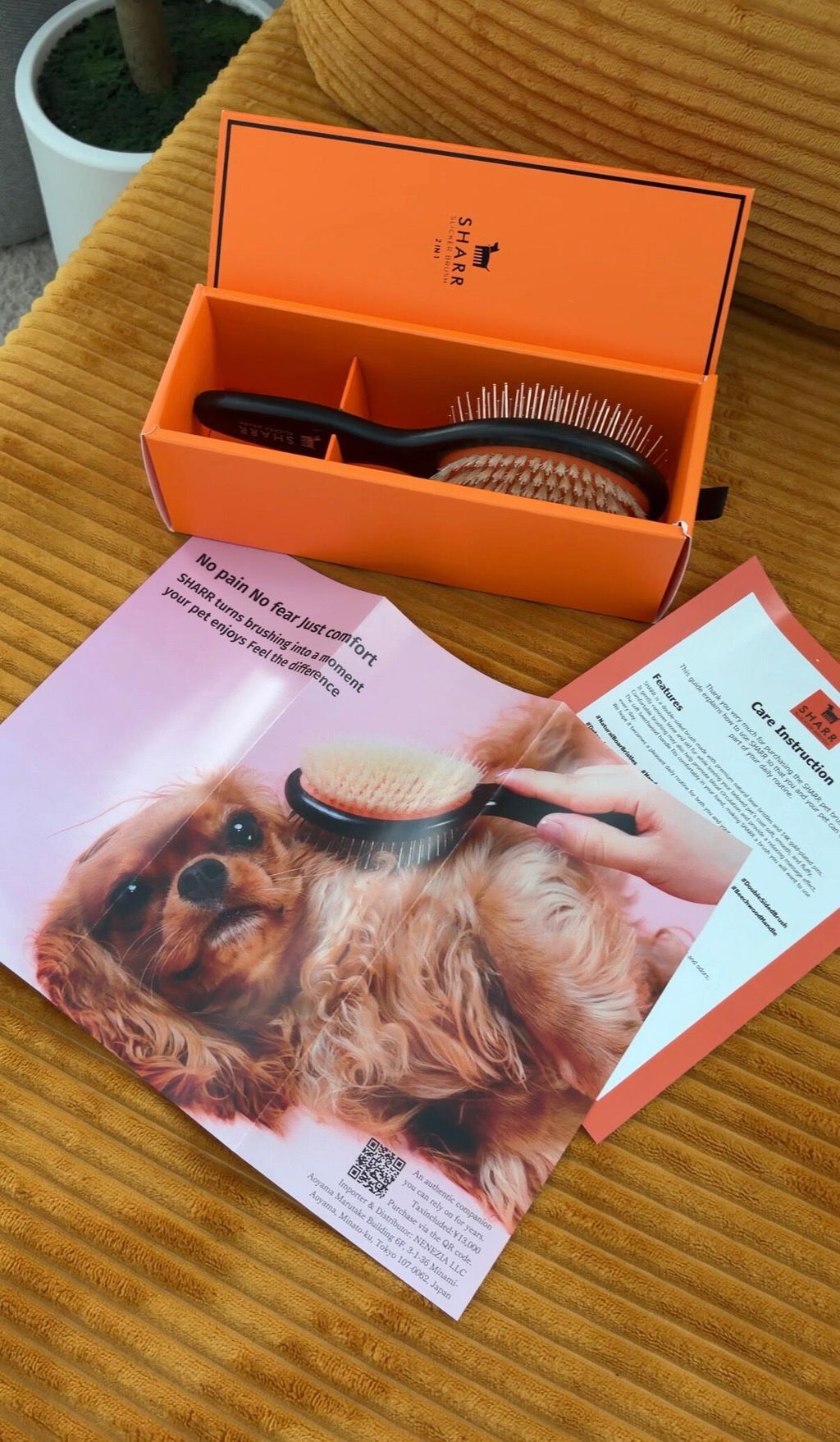
I’m Olive, a member of the NENE’s store team, known for our magical pet brush SHARR 🌿
How much do you know about Siberian Huskies?
Their dignified appearance, fluffy coat, and striking eyes are just a few of their many charms.
But behind those distinctive features lies a fascinating history of living and working alongside people in some of the coldest regions on Earth.
In this article, we’ll take a closer look at the history and personality of the Siberian Husky, the activities they enjoy, their unique coat and coloring, and grooming with SHARR.
We’ve packed together the many things that make Huskies so fascinating—the more you learn, the more you’ll love them! 🐺🧡
🐺 Siberian Husky Encyclopedia|Table of Contents
01|Why Are They Called “Huskies”?
The origin of the name and their history as sled dogs
02|The Story of the Huskies Who Saved Lives
The little-known story of the 1925 serum run
03|What Is a Siberian Husky’s Personality Like?
Are they independent and energetic? Their personality and individuality
04|What Do Huskies Enjoy?
Sledding, winter sports, canicross, and more
05|Things to Know Before Living with a Husky
Exercise needs, heat management, and a glimpse into life with the Olive family
06|What Makes a Husky’s Coat So Special?
The secrets behind their double coat and cold-weather-ready fluff
07|The Beauty of Husky Coat Colors & Eyes
From coat colors to blue, brown, and heterochromia
08|Does Coat Type Change How You Should Groom?
Brushing during shedding season and throughout the year
09|🤍 Siberian Husky × SHARR 🪮✨
Gentle grooming with SHARR
10|Keep Up with Daily Brushing—Without the Pressure
It doesn’t have to be perfect every day. Find what works for your dog.
11|Brushing Is “Communication”
A meaningful time to connect and get to know your dog
12|BONUS 🤍 Life with a Husky at the Olive Home 🐺🧡
What we’ve learned from living with a 30 kg Husky

※Individual characteristics may vary from one dog to another.
01|Why Are They Called “Huskies”?
When you think of a Siberian Husky, you might picture their upright ears, fluffy coat, and dignified, wolf-like appearance.
But what does the name “Husky” actually mean?
As the name suggests, the Siberian Husky has its roots in Siberia.
They lived and worked alongside people in extremely cold environments.
There are several theories about the origin of the name “Husky,” but it is generally considered to be a name that became widely used through the breed’s connection with people living in northern regions.
And when talking about Huskies, we can’t forget their history as sled dogs.
They played an important role in harsh, snow- and ice-covered environments, helping transport people and supplies over long distances.
Today, Huskies are beloved family dogs, but their history is deeply rooted in working alongside humans. 🐺❄️
💡 Husky Fun Fact
Huskies aren’t just strong—they’re known for their exceptional endurance and ability to run long distances.
So when you find yourself thinking,
“How are you STILL full of energy!?”
There’s actually a good reason behind it! 😂

02|The Story of the Huskies Who Saved Lives
There is an unforgettable chapter in the history of the Siberian Husky.
In 1925, when a diphtheria outbreak occurred in Nome, Alaska, a relay of sled-dog teams was organized to transport the life-saving serum needed for treatment.
Through fierce blizzards and extreme cold, the dogs carried the serum from one team to the next, eventually delivering it to the people of Nome.
This historic serum run is still remembered as an incredible example of Huskies and other sled dogs working alongside humans to help save lives. 🐺❄️
The teams covered approximately 1,085 km (675 miles) in just five and a half days.
At the time, transporting the serum by airplane was extremely difficult, so the sled-dog teams played a vital role in getting it safely to Nome.
Among them was Balto, who became famous for leading the final leg of the journey and helping deliver the serum.
Huskies may be fluffy, playful, and full of personality today, but they also have a remarkable history of working together with people to carry something precious when it mattered most.
Knowing this part of their history makes them seem even more impressive, doesn’t it? 🐺❄️

03|What Is a Siberian Husky’s Personality Like?
Huskies may look dignified and serious, but one of their greatest charms is their bright, energetic, and independent personality.
Having originally worked alongside people as sled dogs, they tend to be:
🤍Energetic
🤍Curious
🤍Playful
🤍Sociable
🤍Independent
🤍Affectionate
And if you live with a Husky, you may sometimes find yourself thinking, “You’re way too independent!” 😂
They might not come when you call them.
But when they’re in the mood, they suddenly come looking for cuddles.
That free-spirited personality is part of what makes Huskies so lovable.
🗣️ They’re Very Talkative!
Another irresistible Husky trait is their love of “talking.”
Rather than simply going “woof woof,” they may make sounds like “woo-woo” or “awoo-awoo,” almost as if they’re having a conversation with you.
They may also respond to sirens, musical instruments, and other sounds with a long,
“Awooooooooo!” 🐺🎶
Their unique way of communicating can make you want to ask,
“Wait… what did you just say?” 🤭
Of course, not every Husky will have the same personality.
Some are affectionate, some are laid-back, some are cautious, some are full of energy, and some are especially talkative.
Every dog is unique.
Breed characteristics are simply a guide—what matters most is getting to know your own dog and their individual personality. 🌿

04|What Do Huskies Enjoy?
Living with a Husky, you may sometimes find yourself thinking,
“You can STILL run!?”
They can be incredibly energetic and powerful 😂
Huskies were originally bred to run long distances and pull sleds, so why not enjoy activities that make the most of their strength and stamina? 🐺❄️
🛷 Try Sledding!
When you think of Huskies, sledding naturally comes to mind.
You can try an actual sled-dog race or take part in a sledding experience.
It can be a wonderful way to turn their “old job” into a fun sport you can enjoy together. ✨
❄️ Winter Sports
For a breed that thrives in cold climates, winter is their time to shine.
Enjoy walking through the snow, playing in the snow, or even trying winter sports that you can enjoy together with your dog. ◎
🏃 Canicross
Canicross, where dogs and their humans run together, is another sport that can make great use of a Husky’s power and energy.
There’s something special about the feeling of “running together!”
👃 Exploring & Walks
Of course, high-energy activities aren’t the only things Huskies enjoy.
Taking time to sniff and explore on walks is important too.
Let them discover new places and enjoy a slower pace depending on their condition and the temperature. 🌿
💡 Making the Most of Your Husky
Huskies can really enjoy activities that let them “run, pull, play in the snow, and take on challenges together.”
Especially during the colder months, when Huskies can truly show what they’re capable of. ❄️
Why not find a sport or activity you can enjoy together and make the most of “the things only a Husky can do”? 🐺🧡

05|Things to Know Before Living with a Husky
When living with a Husky, two things that deserve special attention are exercise needs and heat management.
🏃 Plenty of Exercise
If they don’t get enough exercise, all that energy can build up!
Make sure to provide enough daily exercise based on your dog’s individual fitness and energy level.
☀️ Be Careful with the Heat
Huskies are adapted to cold environments, which means they can struggle with heat.
Especially during summer, keep these points in mind:
🤍Walk during cooler times of the day
🤍Keep the indoor temperature comfortable
🤍Make sure fresh water is always available
🤍Avoid intense exercise during the hottest part of the day
🏠 Life with Our Husky
At our home, we use 24-hour whole-house air conditioning during the warmer months to carefully manage the temperature.
…and by “warmer months,” I mean more than just summer! 😂
We basically run the AC from around May until early October.
In other words, the air conditioning is almost always on except during the coldest months. 😂
Even in winter, we keep the heating set relatively low. But once the indoor temperature rises above around 23–24°C (73–75°F), our Husky may start panting.
When that happens, we sometimes even open the windows in the middle of winter! 😂❄️
Before we knew it, our home had become,
completely centered around the dog’s preferred temperature.
But I suppose that’s just part of what life with a Husky is all about. 🐺🧡
🐺 Living with a Husky
It’s not just about providing plenty of exercise.
It’s important to adjust their lifestyle according to the season, temperature, age, and individual condition.
Enjoy your Husky’s endless energy while creating a comfortable lifestyle that works for both of you. 🌿

06|What Makes a Husky’s Coat So Special?
One of the Siberian Husky’s most iconic features is that incredibly fluffy coat!
Siberian Huskies have a double coat.
🐾 Outer Coat
The outer layer helps protect the body from rain, dirt, and the elements.
🐾 Undercoat
The soft, fluffy inner layer helps keep the body warm in cold conditions.
For a breed that has lived in some of the coldest environments on Earth, that thick, fluffy coat has an important purpose. 🐺❄️
❄️ How Cold Can Huskies Handle?
Huskies are known for being exceptionally tolerant of cold weather.
You may hear that they can remain active at around −30°C (−22°F), but this depends greatly on the environment and the individual dog. There is no specific temperature that can be considered universally safe.
Factors such as wind, snow, wet fur, and the dog’s physical condition can all make a difference.
And there’s another fascinating feature of the Husky coat.
Even when their fur gets wet while playing in the snow, a good shake can remove much of the snow and moisture, allowing the coat to dry relatively quickly.
It’s almost like a coat designed for snowy climates! 🐺❄️
That said, wet fur shouldn’t simply be left as it is. Be sure to dry your dog thoroughly when necessary.

07|The Beauty of Husky Coat Colors & Eyes
One of the Siberian Husky’s greatest charms is their beautiful coat colors and mesmerizing eyes. 🐺✨
And there’s actually a lot more variety than you might expect.
🐾 More Than Just Black & White
Some of the most common coat colors include:
Black & White
Silver
Red
Gray & White
Sable
All White
What makes them even more fascinating is that even Huskies with the same coat color can look completely different.
Their facial mask patterns and the way their colors are distributed vary from dog to dog.
Take a closer look at different Huskies, and you might find yourself thinking,
“Wow, their markings are completely different!” 👀
👀 Husky Eyes Are Full of Personality
Huskies can have a variety of eye colors and patterns, including:
Blue
Brown
Bi-Eyed
Parti-Eyed
Bi-Eyed means having a different eye color on each side.
Parti-Eyed refers to having multiple colors within a single eye.
Even among Huskies, the combination of coat color, facial markings, and eye color can completely change the way their expression looks.
That “one-of-a-kind face” is one of the many things that makes every Husky so special. 🐺🩵

08|Does Coat Type Change How You Should Groom?
Siberian Huskies have a double coat, and during shedding season, they can lose a huge amount of undercoat.
You may find yourself thinking,
“I brushed you yesterday… how is there already THIS much fur!?” 😂
🐾 Shedding Season
As the seasons change, Huskies may shed their undercoat all at once.
During this time, more frequent brushing can help manage the extra shedding.
🐾 Everyday Grooming
Brushing isn’t just for shedding season.
Regular grooming can help with managing loose fur and keeping an eye on the condition of their coat.
Because Huskies have so much fur, there’s no need to try to remove it all at once.
Take it little by little, depending on your dog’s coat and condition that day. 🌿
09|Siberian Husky × SHARR
When brushing a Husky, focus on “gently grooming and smoothing the coat” rather than simply trying to remove as much fur as possible.
Here’s the recommended order when using SHARR:
STEP 1|Check with Your Hands First
Before reaching for the brush, gently feel through the coat.
Check for any tangles or mats.
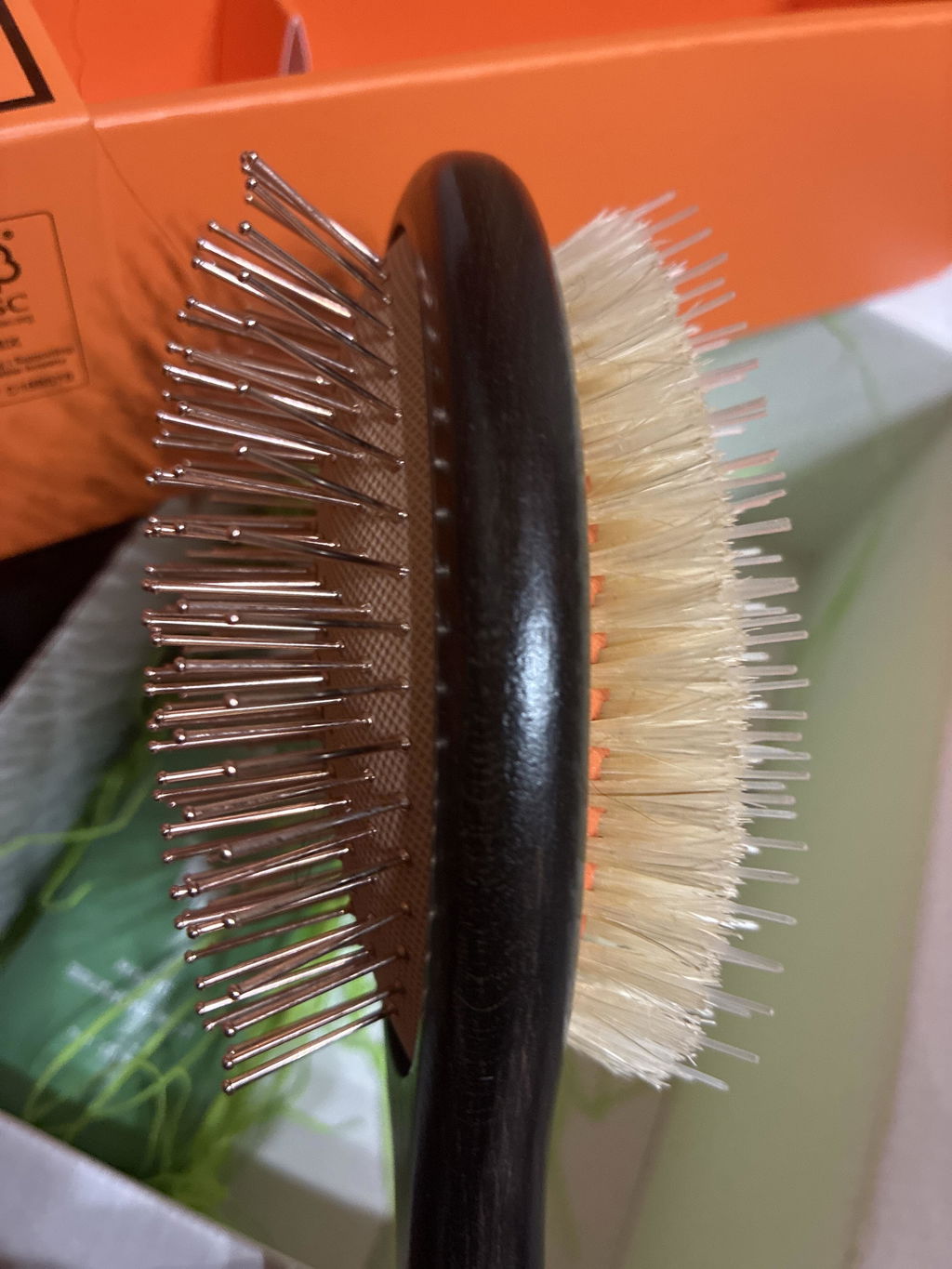
STEP 2|Groom with the 14K Gold-Plated Pin Side
Separate the coat as you brush, using gentle strokes.
Avoid pulling and work through the coat little by little.
STEP 3|Finish with the Boar Bristle Side
Finally, use the boar bristle side to smooth the coat along its natural direction.
Once the coat looks soft, fluffy, and beautifully groomed, you’re done! 🐺✨
🐺 A Great Help During Shedding Season
SHARR is known for helping create a beautifully groomed, polished coat.
And it’s also incredibly useful during shedding season, when Huskies have an especially large amount of loose fur.
The brush effectively catches loose hair, making it a helpful tool not only for grooming and smoothing the coat, but also for managing shedding.
🧡 Add SHARMI When the Coat Feels Dry or Needs Extra Smoothness
When the coat feels dry or you want to make brushing smoother and more comfortable, try adding our brushing mist, SHARMI.
Apply it to the coat first, then brush through gently. This can help reduce friction during brushing and make grooming more comfortable.
In particular, the fluffy, easily “exploding” areas around the rump and tail can be moisturized with SHARMI while brushing, helping the coat come together more neatly for a beautifully groomed finish. ✨
Give your Husky’s fluffy coat the gentle care it deserves with SHARR and SHARMI. 🐺🧡
10|Keep Up with Daily Brushing—Without the Pressure
Just because Huskies have so much fur doesn’t mean you need to aim for “a perfect full-body brushing every single day!”
During shedding season, their undercoat can shed heavily, so more frequent grooming is helpful. However, there’s no need to spend a long time brushing all at once.
You can break it up little by little—perhaps the back today and the chest tomorrow.
Find a routine that works naturally with your dog’s coat, condition, the season, and your lifestyle. 🌿
And most importantly, don’t let brushing become something your dog dislikes.
Sometimes, simply saying, “That’s enough for today,” and stopping is part of making grooming a positive experience.
“Not perfect every day—just a routine that works for your dog.”
Let’s make brushing time with your Husky something you can both enjoy, comfortably and happily. 🐺🧡
11|Brushing Is “Communication”
When you brush your dog, you may notice small changes that you might otherwise miss.
There are things you can only discover because you’re gently touching and checking their body.
That’s why brushing is not only “time to keep their coat clean,” but also “time to get to know your dog.”
Try taking your time, talking to them as you brush:
“You shed so much today!”
“Does that feel good?”
Enjoying that soft, fluffy Husky coat while turning grooming into an important moment of connection with your dog.
We hope you enjoy those special moments together with SHARR. 🐺🧡

※They’re all the same dog, by the way! 😂 He has such a wonderfully expressive face 🤍
As many of you reading this column already know, we have a Husky in the Olive family too! 🐺
He’s a handsome boy with a white-and-black coat and beautiful amber-toned eyes. 😎
Since we see him every day, we don’t always notice how much he’s grown. But whenever we meet someone new, they often say,
“Did he get bigger again?”
“He really lives inside the house with you?”
And they’re always surprised! 😂
(He’s a 3-year-old boy and weighs around 30 kg (66 lbs). 🩵)
Originally, we weren’t planning to get a dog at all. But after much begging from the family, somehow, we ended up welcoming a dog into our home. 🏠
Our house wasn’t originally designed with a dog in mind, but little by little, things have changed.
The furniture layout has been adjusted, new house rules have been created, and we’ve tried to create a home where both our dog and our family can live together comfortably and safely. ☺️
(My friends say we’re so dog-first that “the humans are basically living inside a giant doghouse.” 😂)
Of course, there are plenty of challenging moments too.
But I believe that even those challenges are part of the joy of sharing your life with a dog. 🩵
They’re such lovable beings—the more love you give them, the more love they seem to give straight back. 🩵
And just like that, my love for Huskies got the better of me, and this section ended up being much longer than planned. 🤭🧡
Until we meet again! 💫
I wonder which breed will appear next? Stay tuned! 😎
Olive 🌿