How to Choose the Right Pet Brush for your pet

Pet stores carry a wide variety of grooming tools, including slicker brushes, pin brushes, rubber brushes, combs, and natural-bristle brushes.
With so many options, many pet parents find themselves wondering:
- Which brush is right for my pet?
- What if my pet dislikes being brushed?
- How can I avoid choosing the wrong replacement brush?
Here is the short answer: no single brush can handle every grooming need perfectly.
Instead of simply looking for the brush that removes the most hair, choose your tools according to your pet's coat and what you want to achieve—whether that is removing loose hair, working through tangles, smoothing the coat, or making everyday grooming more comfortable.
In this guide, we explain the differences between five common types of dog and cat brushes and show you how to choose the right combination for your pet's coat.
Start with the Purpose of Grooming
If you are unsure which brush to choose, begin by deciding what you want the brush to do.

Even for the same pet, grooming needs can change with the season and the condition of the coat. During shedding season, for example, you may first use a brush that removes loose undercoat, then finish with a pin brush or natural-bristle brush to smooth the coat.
Why It Is Better to Use More Than One Brush
Every type of brush has its own strengths and limitations.
A brush that removes loose hair effectively may not be the best tool for creating a smooth, polished finish. Conversely, a gentle everyday brush may not be able to handle compacted mats or a large amount of loose undercoat.
Trying to complete every step with a single brush can lead to problems such as:

To help prevent these problems, it is important to understand your pet's coat type and choose brushes suited to it.
5 Types of Pet Brushes: Features and Best Uses

1. Slicker Brush
A slicker brush has a flat or slightly curved head covered with fine metal pins. It is designed to remove loose hair and gently work through tangles.
It is particularly useful for long-haired pets, curly coats, and double coats during shedding season. However, the fine pins may irritate the skin if too much pressure is applied, so a gentle touch is essential
Best for:
- Removing loose hair during shedding season
- Helping prevent tangles in long or curly coats
- Carefully working through small knots

2. Pin Brush
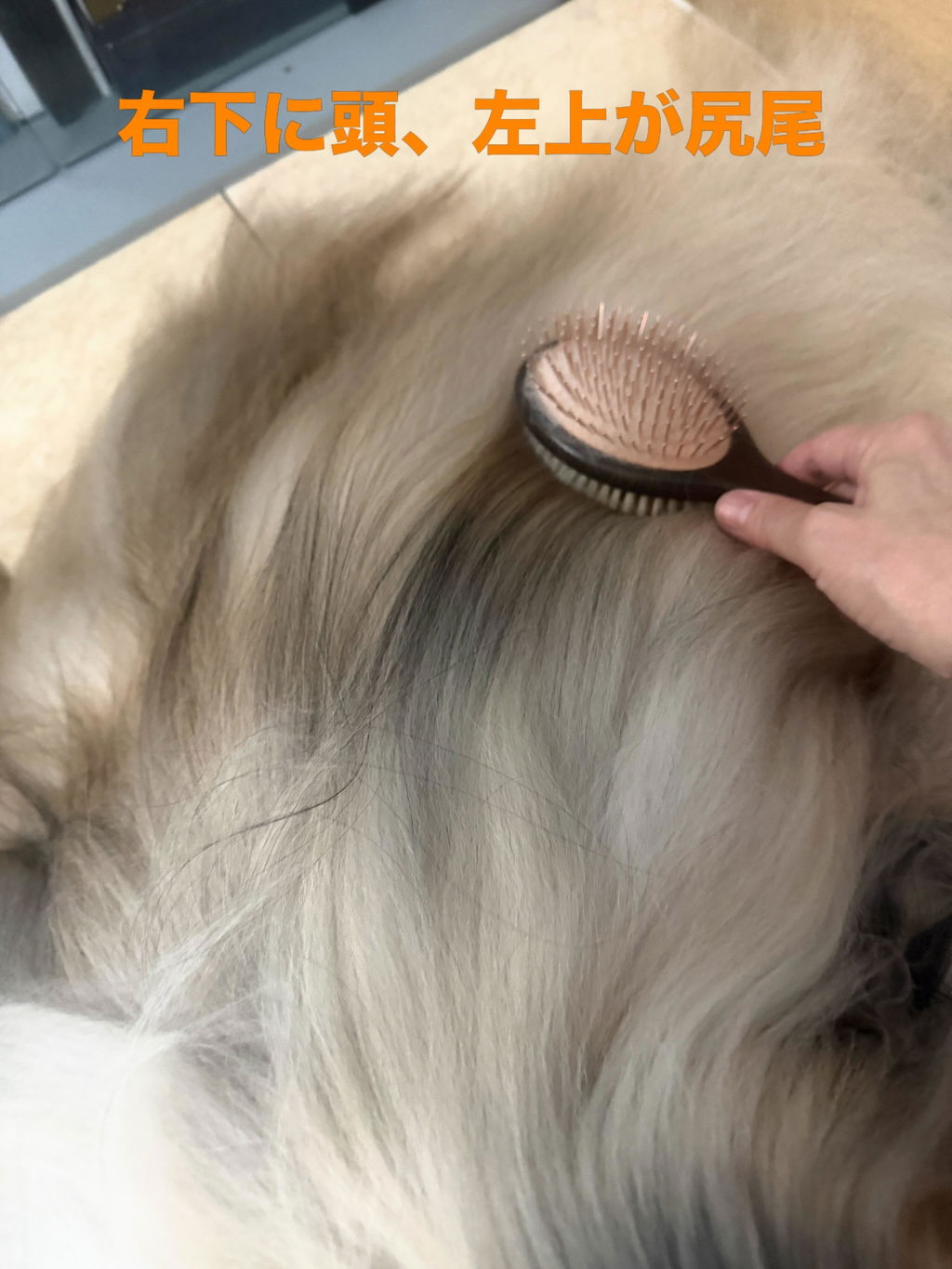
A pin brush resembles a human hairbrush. Its widely spaced pins move through the coat while gently smoothing and separating the hair.
Brushes with rounded pin tips tend to feel gentler against the skin, making them a practical choice for everyday grooming and for pets that are still getting used to being brushed.
Best for:
- Everyday coat maintenance
- Gently smoothing long or fine hair
- Checking the whole body before and after grooming
- Turning grooming into relaxing bonding time

3. Rubber Brush or Grooming Glove
Rubber brushes and grooming gloves are made from soft rubber or silicone. As you gently stroke the coat, the flexible surface collects loose hair.
They are especially well suited to short-haired pets and pets that are wary of metal grooming tools. A grooming glove can feel similar to ordinary petting, making it a friendly first step for brush-shy pets.
Best for:
- Removing loose hair from short coats
- Introducing grooming to pets that dislike brushes
- Combining grooming with a gentle massage

4. Comb
A grooming comb, often made of metal, is useful for checking whether any tangles remain near the roots after brushing.
It also works well for detailed areas such as around the face, behind the ears, under the legs, and around the paws. If the comb catches, do not pull it through with force. Stop and loosen the tangle gradually with your fingers or another suitable brush.
Best for:
- Checking for remaining tangles after brushing
- Detailed grooming around the face, ears, legs, and paws
- Finishing long or curly coats

5. Natural-Bristle Brush
Natural-bristle brushes made with boar or pig bristles help remove surface dust and create a smooth, polished finish.
They are less likely to create static and can help bring out the coat's natural shine. However, they are not designed to remove compacted mats or large amounts of undercoat. When necessary, use one together with a slicker brush or comb.
Best for:
- Finishing after the main brushing session
- Smoothing the coat and enhancing its natural shine
- Removing dust from the surface of the coat
Recommended Combinations by Coat Type

A. Short, Single Coat
Recommended routine:
Remove loose hair with a rubber brush, then smooth and polish the coat with a natural-bristle brush.
Because a short single coat lies close to the body, begin with a soft rubber brush and gently lift away loose hair. Follow with a natural-bristle brush, moving in the direction of hair growth, to remove surface dust and leave the coat naturally smooth and glossy.
Some pets with short coats are sensitive to pressure on the skin, so avoid vigorous rubbing. Use light, massage-like strokes instead.
B. Short, Double Coat
Recommended routine:
Use a slicker brush to care for the undercoat, then finish the surface with a natural-bristle brush.
Even when the outer coat is short, a soft, dense undercoat may lie beneath it. This undercoat loosens significantly during shedding season.
Use a slicker brush carefully, keeping the pins from pressing firmly against the skin, and remove the loose undercoat a little at a time. Then brush in the direction of hair growth with a natural-bristle brush to collect finer loose hairs and dust while smoothing the surface.
Avoid repeatedly brushing the same area, as this can remove more hair than necessary.
C. Long, Single Coat
Recommended routine:
Work through the coat from the ends with a pin brush, then use a comb to check the roots and detailed areas for remaining tangles.
Long hair tangles easily, so first check the coat gently with your fingers. Begin brushing at the ends, then move gradually toward the middle and roots. Starting directly at the roots may pull the coat and cause discomfort.
Once the full coat is smooth, pass a comb through it to check for snags behind the ears, under the legs, and around the paws. If the comb stops, do not force it through. Return to the pin brush and gently loosen the tangle.
D. Long, Double Coat
Recommended routine:
Use a slicker brush to care for loose hair and tangles near the roots, then check the entire coat with a comb.
A long double coat has a soft undercoat beneath longer guard hairs. If you brush only the surface, it is easy to miss loose hair and tangles close to the skin.
Part the coat into small sections and gently use a slicker brush to remove loose undercoat and minor tangles near the roots. Follow with a comb, moving all the way through to the ends. Pay particular attention to areas behind the ears, under the legs, around the belly, and near the paws.
Does Your Pet Dislike Brushing? The Brush May Be Part of the Problem
A pet's dislike of grooming is not always simply a matter of personality. Common causes include:
- The pins are pressing too firmly against the skin
- The brush catches on a mat and pulls painfully
- The grooming session lasts too long
- You begin with a sensitive area, such as the face or paws
- Your pet is wary of the brush itself
Begin with an area where your pet is comfortable being touched, such as the back or side of the body. At first, just a few brush strokes may be enough.
Praise your pet or offer a small reward afterward so they can gradually learn that the brush is nothing to fear.
Changing brushes alone may not make your pet enjoy grooming immediately. Be patient and move at your pet's pace—the gentle route is often the fastest one in the long run.
Five Things to Consider Before Buying a Pet Brush
Before purchasing a new brush, check the following five points.
1. Does It Match Your Main Grooming Goal?
Decide which concern matters most right now: loose hair, mats, everyday maintenance, or adding shine.
2. Does It Suit the Length and Density of the Coat?
Long coats generally need pins that can move through the coat effectively, while short coats often benefit from softer materials that do not overstimulate the skin. Select the brush according to your pet's coat.
3. Are the Pin Tips Too Sharp?
For a brush you plan to use every day, lightly press the pins against your palm first. Check whether they feel sharp, irritating, or painful.
4. Can You Use It Without Applying Excessive Force?
A brush that is difficult to hold may cause you to apply more pressure without realizing it. Look for a shape that sits comfortably in your hand and makes the brushing angle easy to control.
5. Is It Easy to Maintain and Use Regularly?
Consider how easily you can remove collected hair, how the brush should be stored, and how durable it is. Because grooming is an ongoing routine, the brush should also be practical and comfortable for you to use.
About the SHARR Double-Sided Pet Brush

If repeatedly switching between brushes makes everyday grooming feel cumbersome, a double-sided brush can be a convenient option.
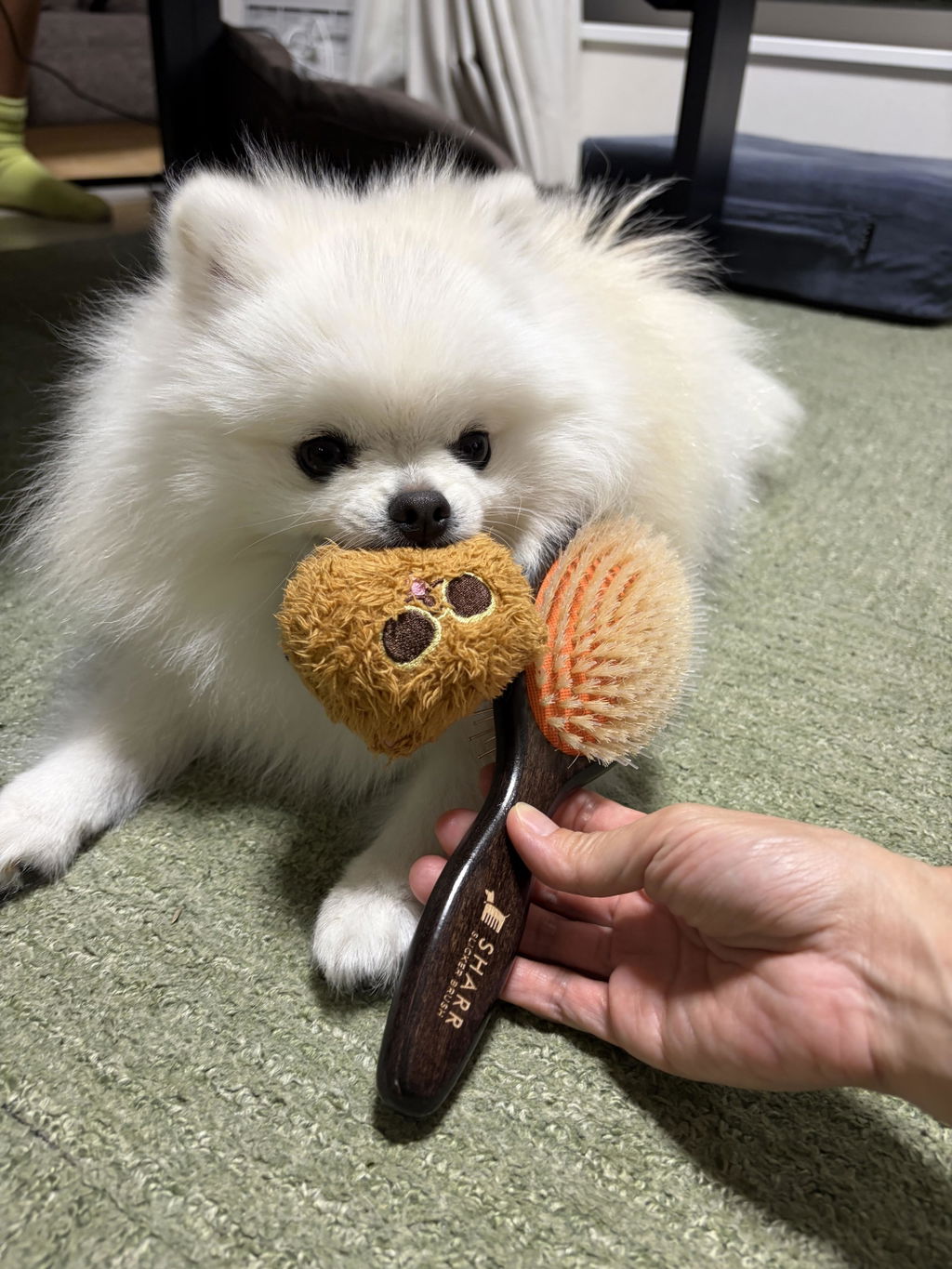
The SHARR Pet Brush from NENE's store combines a 14-karat gold-plated pin-brush side with a natural boar-bristle side in one double-sided design.
The rounded pin tips are designed for comfortable everyday brushing and coat maintenance. The natural boar-bristle side removes surface dust and provides a smooth, polished finish with a natural shine.
SHARR May Be Right for You If You:
- Want an easy-to-use brush for everyday grooming
- Are concerned about irritation or discomfort during brushing
- Want to keep your pet's coat smooth and naturally glossy
- Would like a pin brush and natural-bristle brush in one tool
- Want grooming to become calm, enjoyable bonding time
As explained above, SHARR is not intended to replace every grooming tool. For compacted mats or a large amount of loose undercoat, use an appropriate slicker brush, comb, or other tool as needed.
Grooming should not be judged only by how much hair a brush removes. What matters is creating a routine that feels comfortable, can be continued every day, and leaves your pet's coat looking beautiful.
Why not make SHARR the foundation of that routine?